Wat Arun history in short
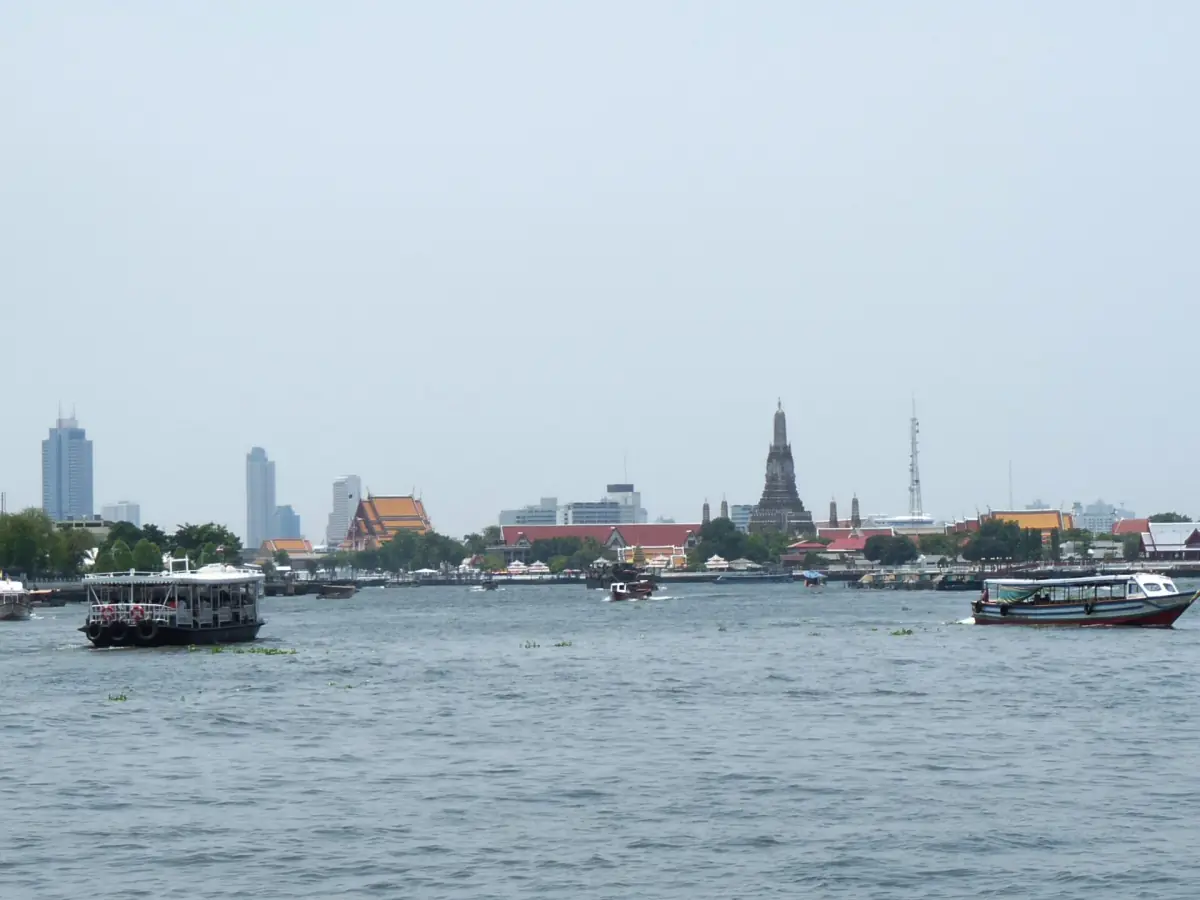
Wat Arun Ratchawararam stands on the west bank of the Chao Phraya in Bangkok Yai, on the Thonburi side. A temple already stood here in the Ayutthaya period, under older names: Wat Makok and later Wat Chaeng. The exact year of its founding is not known.
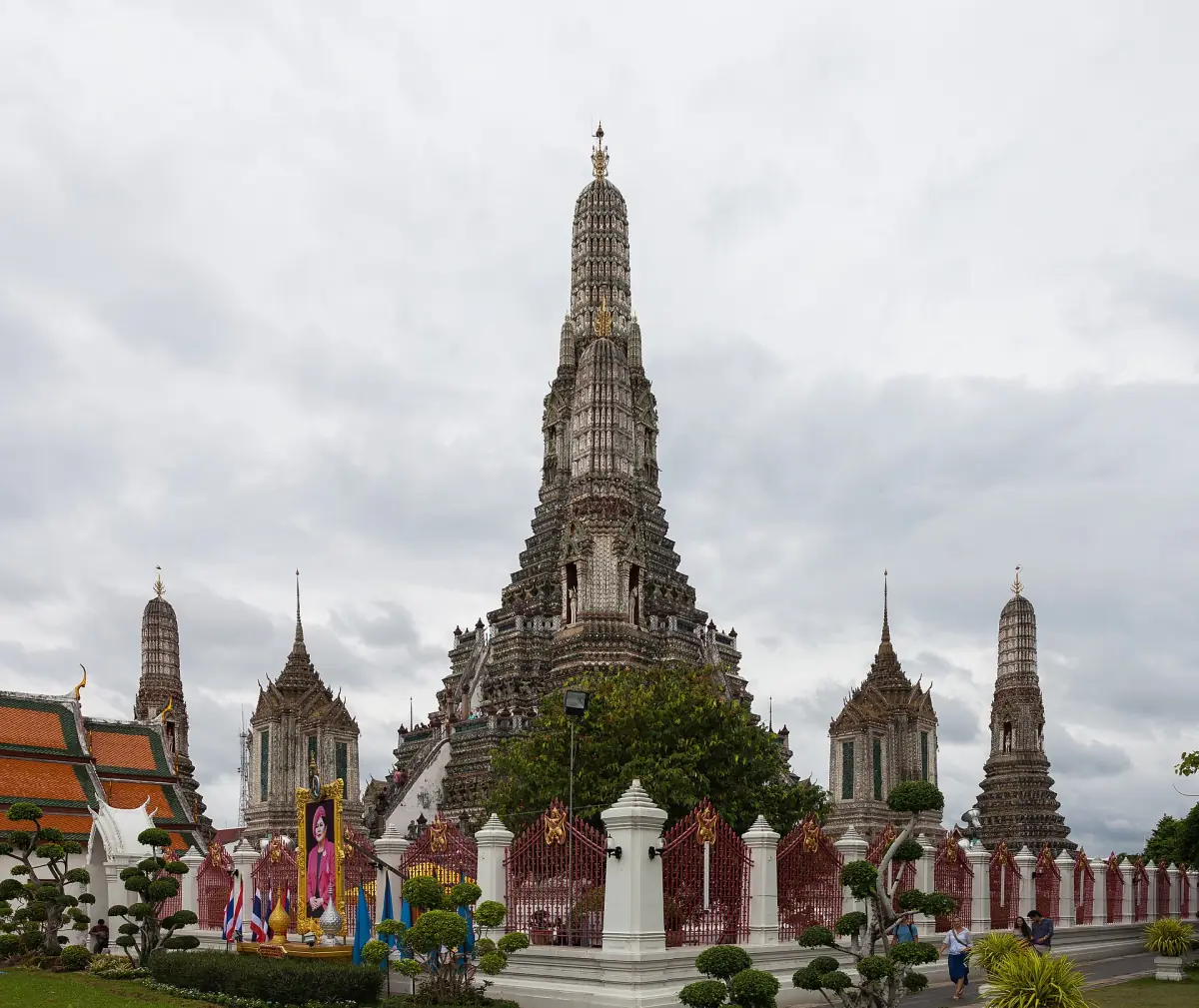
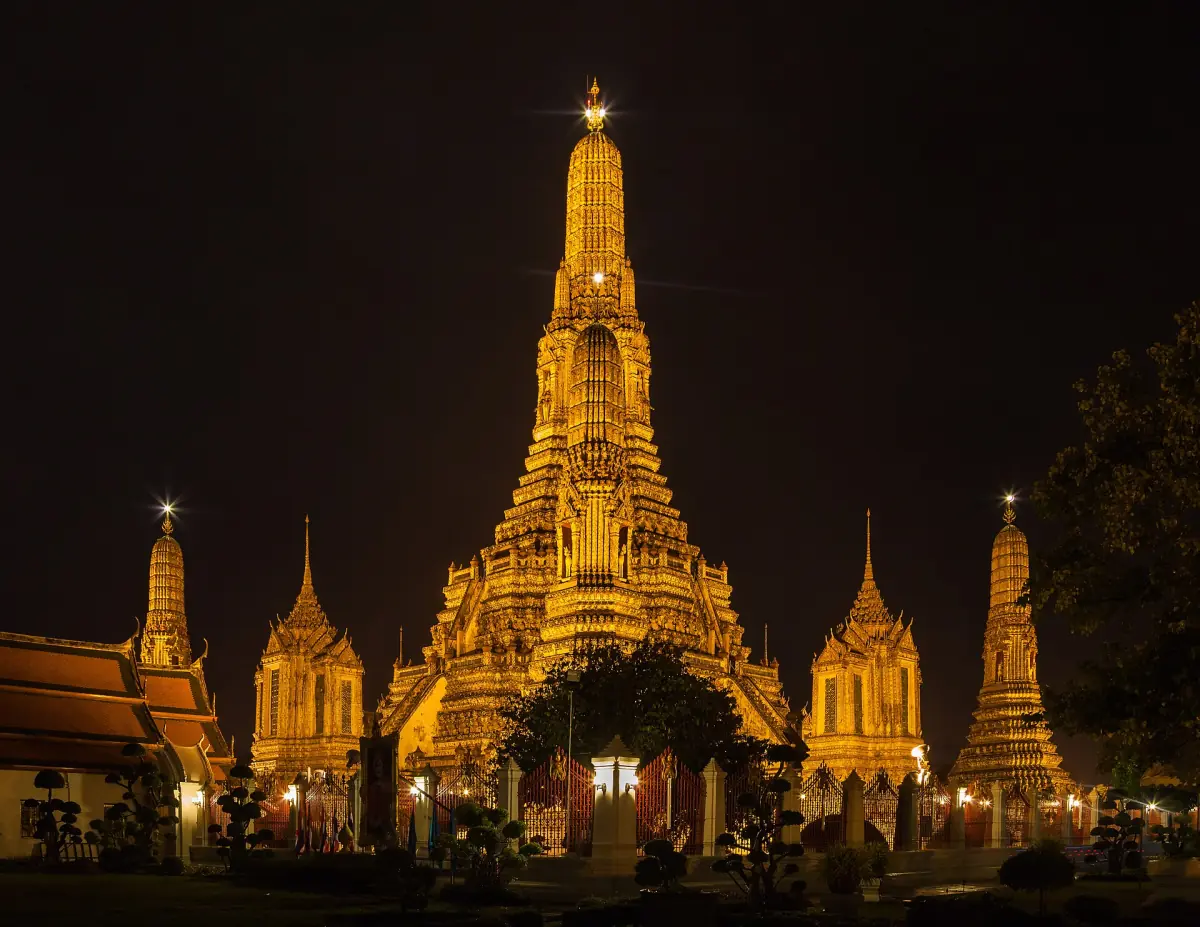
The temple grew in phases. It belonged to the royal grounds under King Taksin in Thonburi, was renewed on a large scale under King Rama II, and its great prang was built over the following reigns. Today it is a royal Buddhist temple, and the prang is its best-known feature. If you plan to see it in person, our Wat Arun tours page compares temple tours and combined trips.
From Wat Makok to Wat Arun
The main stages in order, shown by reign.
| Period | What happened | What you can still see |
|---|---|---|
| Ayutthaya period | A temple stands on the west bank, known as Wat Makok and later Wat Chaeng | The riverside location |
| King Taksin, Thonburi | The temple belongs to the royal grounds, and the Emerald Buddha is kept here for a time | – |
| King Rama II | A large renewal of the temple | – |
| King Rama III | Construction of the great prang | The central prang |
| King Rama IV | Work on the prang continues toward completion | The finished tower and its decoration |
| 2013 to 2017 | Restoration from September 2013 to August 2017 | The restored prang |
Think of the finished prang as a long project spread across three reigns, not as one date on a calendar.
Our pick: a guided visit
A guided visit of the palace, Wat Pho and Wat Arun puts the temple next to its neighbours on the same river.
Hand-picked tours, booked through GetYourGuide. Prices are indicative starting prices in US dollars (as of October 2026). Tap a tour for live availability and the current price in your currency.
Wat Arun tours and river trips
Temple walks, river cruises and canal tours, with live prices and availability.
The story behind the name
Temple of Dawn, Wat Chaeng and the king who arrived at first light.
The Temple of Dawn
Wat Arun is known in English as the Temple of Dawn. The name goes back to Wat Chaeng, the older name of the temple. Tradition links it to King Taksin, who is said to have reached the temple at daybreak. Take this as the story that is handed down, not as a documented travel diary.
King Taksin and Thonburi
Under Taksin the temple belonged to the royal grounds in Thonburi, on the west side of the river. The temple lies on the Thonburi side, across the river from the Grand Palace.
The Emerald Buddha
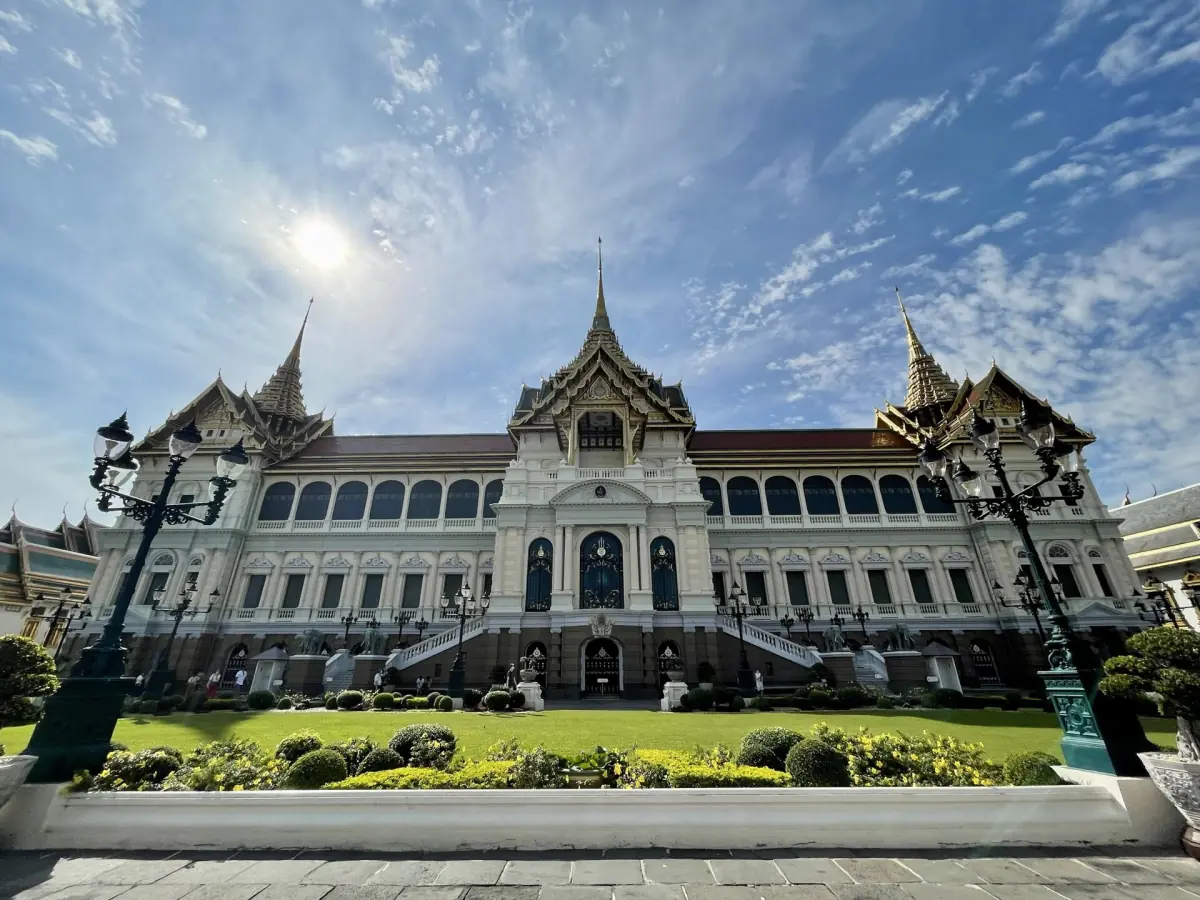
The Emerald Buddha was kept at Wat Arun for a time. After the change to the Chakri dynasty it was moved to Wat Phra Kaew. Do not look for it at Wat Arun today: it is in the Grand Palace complex.
The Grand Palace →Rama II, III and IV
A major renewal fell under Rama II, the great prang was built under Rama III, and its completion falls into the time of Rama IV. The result is a tower built in stages, which is part of why the decoration looks so rich.
What the buildings show today
History you can see on a visit.
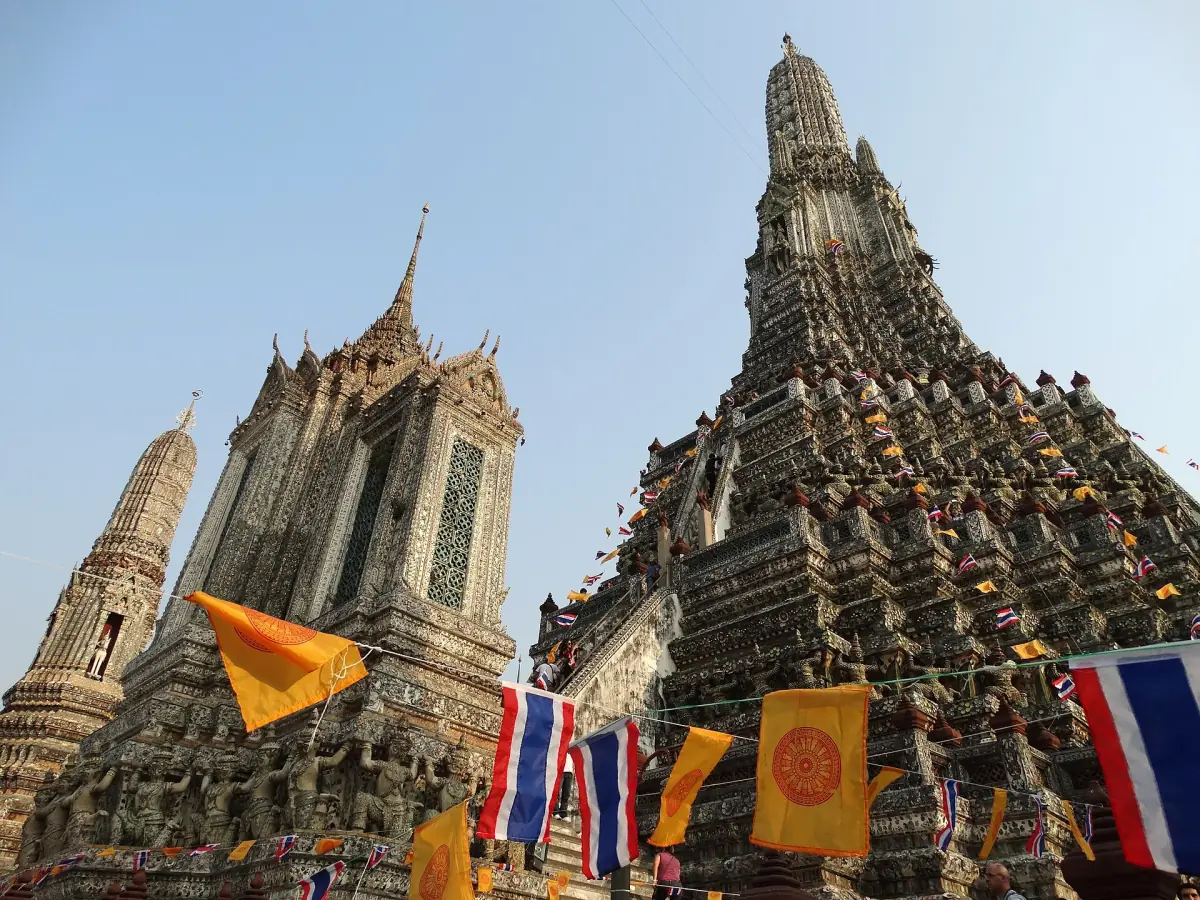
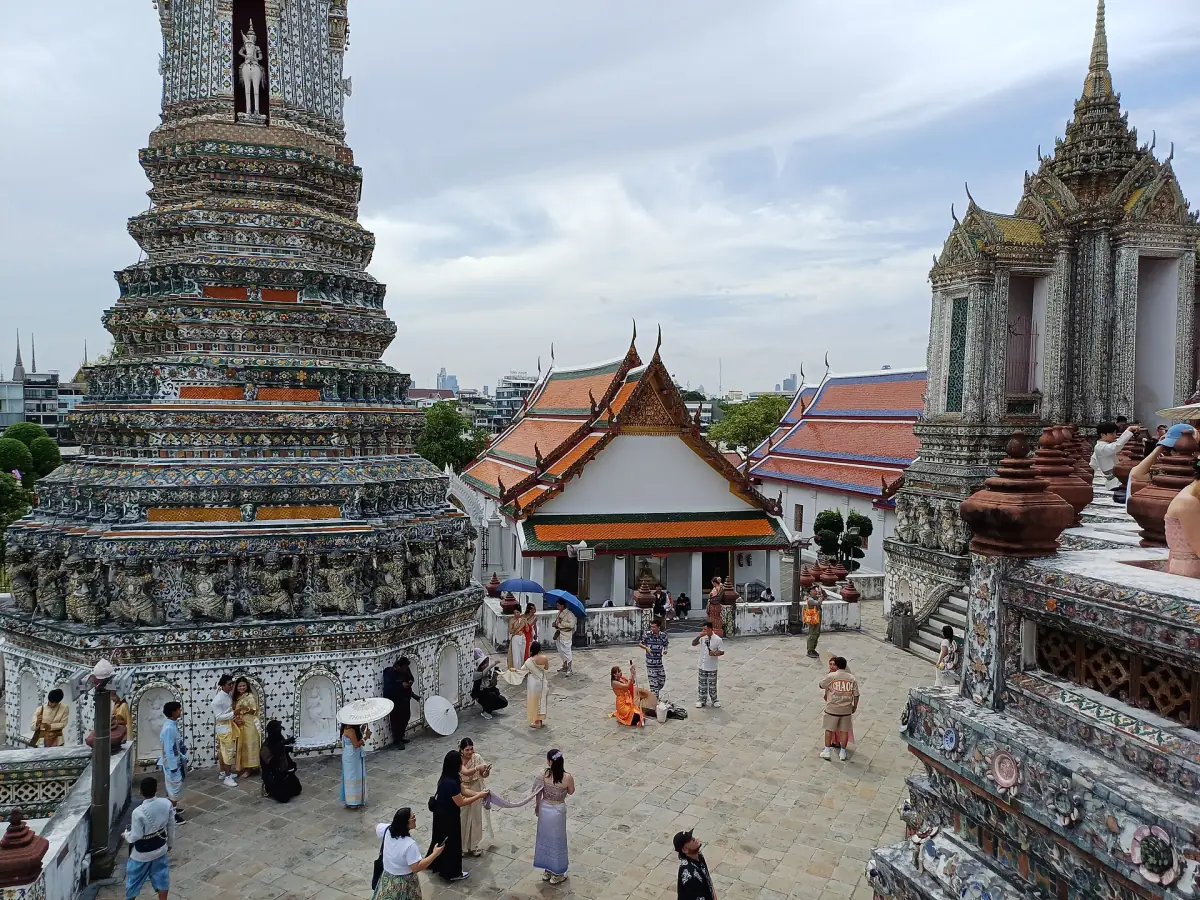
The prang is decorated with shells, glazed ceramic fragments and pieces of Chinese porcelain set into the plaster, among them floral patterns. Look at the decorated steps. Guardian figures stand at a temple gate, and the ordination hall and rows of Buddha figures are part of the temple.
Wat Arun is a place of worship, so dress and behave as you would in any Thai temple. The dress code page explains what to wear, and the prang page explains the tower and the terraces you can reach.
The restoration from September 2013 to August 2017 is a completed project.
History to look for on a visit
Four things that connect the past to what you see.
The main prang and its four companions
The central tower is surrounded by four smaller prangs. Together they show how the temple grew around one tall center over several reigns.
The ordination hall
The ordination hall is the part of the temple tied to monastic life. Walk the entrance path to it, and follow the etiquette of any Thai temple.
Rows of Buddha figures
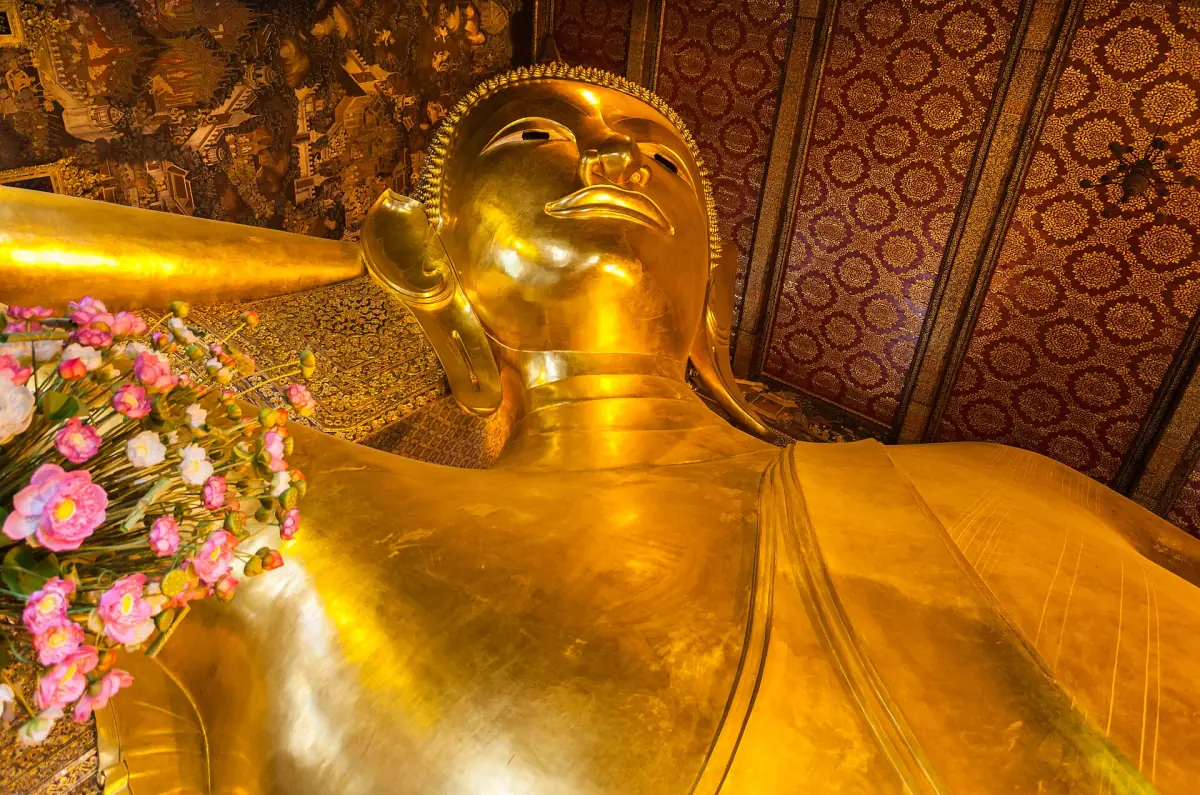
Rows of Buddha figures and the temple roofs show the working religious life of the site, which continues beside the visitors.
The river itself
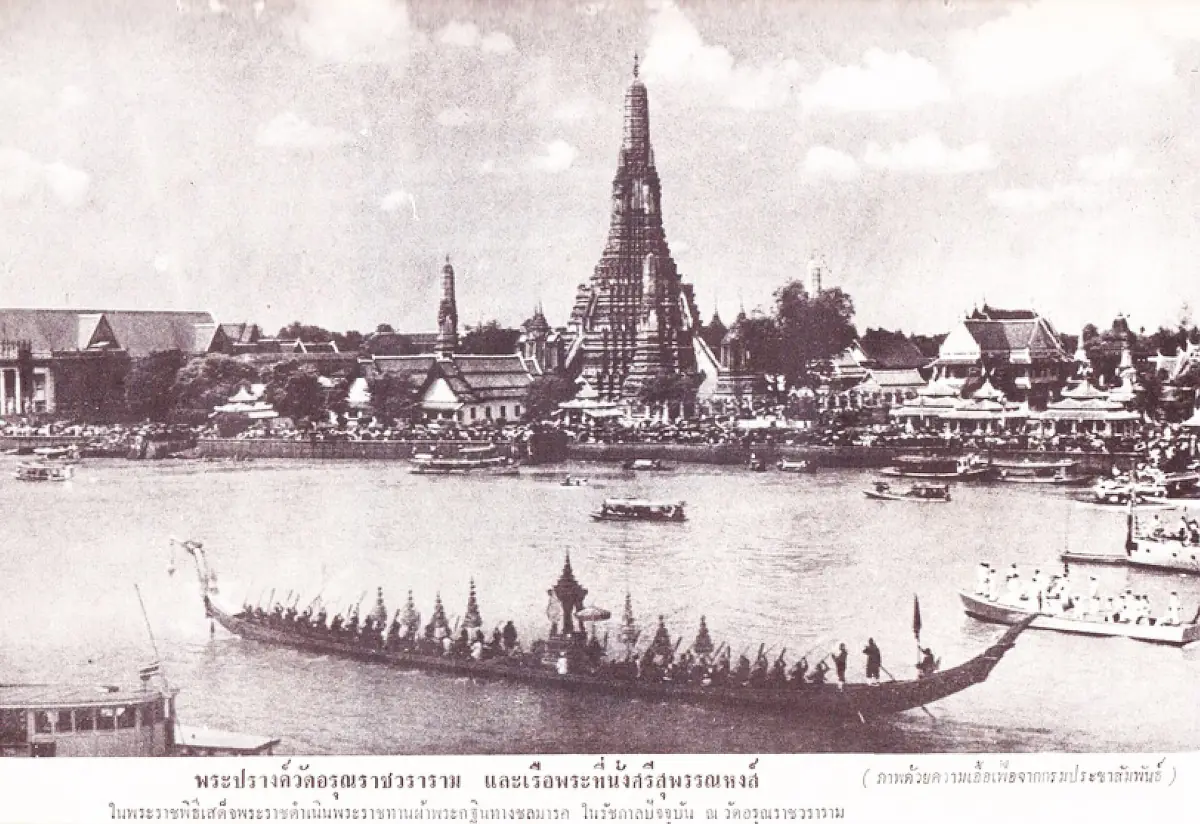
The river was the main road of the old capital. A photo from 1968 shows Wat Arun with the royal barge Suphannahong on the water, and a boat is still the best way to see the temple as it was meant to be seen.
Chao Phraya river cruises →Keep exploring
Pages that continue the story.
Wat Arun history: frequently asked questions
When was Wat Arun built?
A temple already stood here in the Ayutthaya period. The exact founding year is not known. The great prang was built in stages under Rama II, Rama III and Rama IV.
Why is it called the Temple of Dawn?
The name comes from Wat Chaeng, an older name of the temple, and from the tradition that King Taksin arrived here at dawn. It is a handed-down story and not a dated record.
What was Wat Arun called before?
Earlier names are Wat Makok and Wat Chaeng. The present name is Wat Arun Ratchawararam.
Is the Emerald Buddha at Wat Arun?
No. It was kept at Wat Arun for a time, but it was later moved to Wat Phra Kaew, where it is today, inside the Grand Palace complex.
When was the prang restored?
The restoration ran from September 2013 to August 2017. It is a completed project.
Is this the official Wat Arun website?
No. This is an independent travel guide. It is not run by the temple, by the Tourism Authority of Thailand or by any tour operator.